Friday, June 14, 2013

Our Last Day Of Intersession

Wow! I can't believe this is our last day. It's amazing how much we have gone through, this is the day where our school year of 2013 ends, June 14, 2013. I will miss it, I know it for sure. We've had so many fun, amazing & great memories starting since semester one. I remember the first day of intersession, architecture. At first, I thought this was going to be a boring year but as the days past, I noticed that I was wrong. I was actually having fun. Our memories that was created from this year is something that we should never forget. Then my clique, Pogisa, Fifi, Alejandra, & I. We were some really annoying kids for Rafael I'm guessing, but look at the bright side, we had fun and that's what only matters. Our field trips though, haha I definitely won't forget this. When we would complain over little things, "It's hot" "It's cold" "I'm hungry". I remember how we would tell the chaperons that we're supposed to eat at a restaurant but in reality, we're supposed to bring our own lunch. I want you guys to know that I actually consider you guys as a family, I'm going to miss you guys. Honestly, I really liked this intersession but when talking about learning, I think that Rafael should next time teach his students in a different way, by a different way I mean that he should replace those "movies" that he shows us, It's really boring, I'm not going to lie... Our small projects was something fun. Especially, group projects, It brought us more closer. When voting, we would all agree on who should win, lol. Then when Martin would find at least something wrong with someone's sketch or project & after, Rafael would argue with him. Fifi's pool though. The cook-offs that we would go to, do it for the food. After all, We were one bad-ass class, lol. Basically, I just wanted to say that I am really glad that I had this architecture class, I've learned so much, even outside of class. I'm happy for meeting you guys & glad for having you guys in my life. I'm going to miss our intersession & seeing you guys every day. Hopefully, we get to see each other again.

Thank You Guys For A Great Year! I Won't Forget Our Memories.

#Good Luck Seniors
#Today tho, Alejandra choking on the D-rink.
#Cidny, Pogisa, Fifi, Alejandra

                                                 Ain't Noody Messing With Our Clique ~

Olympic Architecture

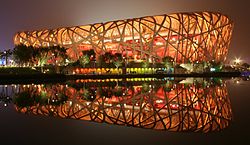
The Beijing National Stadium Is An Example Of Olympic Architecture. The Beijing National Stadium Is Located In Beijing, China. It opened in June 28, 2008 by Herzog & de Meuron. This stadium was used for the Summer Olympics in the year of 2008.
The Beijing National Stadium
 Beijing, China.
I think that this stadium is really creative because it's different from what you see in a regular stadium. In my perspective, this stadium looks like a birds nest because of the lines around the stadium. If you think about it, the lines could be the sticks from a bird's nest. When talking about the look of it, I think that it's beautiful in it's own unique way, the lights make the building sparkle it's beauty.

For more information about this stadium: http://en.wikipedia.org/wiki/Beijing_National_Stadium

Farnsworth House

Farnsworth House ~

Farnsworth House

The Farnsworth house is a house located in 14520 River Rd, Plano, IL 6054, constructed in 1951 by Ludwig Mies Der Rohe. It was built for Dr. Edith Farnsworth so that she could do hobbies while in there/living there. This house became owned by the National Historic Landmark in the year of 2006. Fact, the house was actually flooded in 2008, caused by the Hurricane Ike. As for this day, this house became very successful and made it to it's history.
Lego of The Farnsworth House
Became so successful, they even made a Lego version of the Farnsworth house.

Field Trip

Field Trip: Fox Theater ~

On May 27, 2013, our architecture class had a field trip to Downtown, Redwood City.
As we got there, Rafael, our architecture teacher, told us to sketch the Fox theater from our view. 


Sketch 6.13.13

 Part two from our Sketching from yesterday, June 13, 2013. After being tasked for sketching the front side of our school, we then had to go to the back side of our school building and had to sketch the back part of the school. 


Back part of our school.
 Everest Public High School, Redwood City, California

Sketch: 6.13.13

Yesterday, June 13, 2013, our architecture class went outside of our building and were tasked to sketch the front building from our perspective.
Front Part Of Our School, Everest.
Everest Public High School, Redwood City, California

Final Project

                                  Final Project: Pavilion  


Our pavilion is called "The Future". The Pavilion that our team created is a structure in a shape of a cylinder because it brings in together two materials, while at the same time, contrasting them. The materials that  are  going to be used for the pavilion would be bamboo and also PVC pipes. As in for the inside part of our pavilion/building, there is going to be two entrances. One side would be used for the movers. For example, it would be used for the people to bring in their materials for their  “show” since our pavilion is going to be used for presentations. One of the doors is going to be a path connecting both structures of the cylinder pavilion. As said before, our pavilion is going to be used for presentations such as art project being showed, small concert, shows, etc., etc. Therefore, because of this idea of our pavilion usage, we decided to add a window with a big width so that people could instead watch the presentation that is being taken, outside of the pavilion as there decision, simple as that. Our pavilion is in two circles and one of them moves, the materials that we are going to use for that idea (one structure of the pavilion moving forward) is going to be tracks on the bottom of the lower cylinder structure. In able to move the lower structure of our pavilion, we will just have this machine in which it will control the movement of our pavilion. Basically, like a train. The direction that the small cylinder structure will be going is back and forward. Twenty feet would be five inches in a ruler and then four feet would be one inch. The diameter of our structure would be four inches and the area would be twelve.five inches. As said before, one inch will equal to four feet.


Tuesday, June 11, 2013

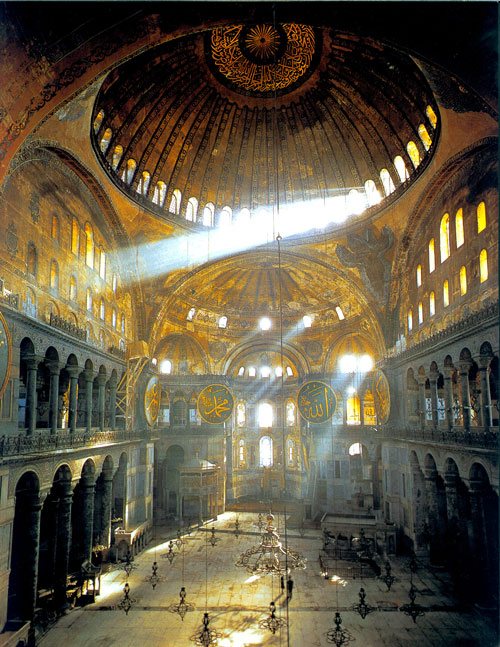
Hagia Sophia

Hagia Sophia ~

The Hagia Sophia building was finished in 1453 & was created to be used as a church. This is located in Turkey. The Hagia Sophia is enormous. As years went by, the church went from a mosque and now it's a museum. This big museum obviously, became a very successful building/church/museum. It's amazing how long it has lived. From the year of 532 till' 1935. This museum is so beautiful in my opinion, especially the inside of the museum.

Field Trip

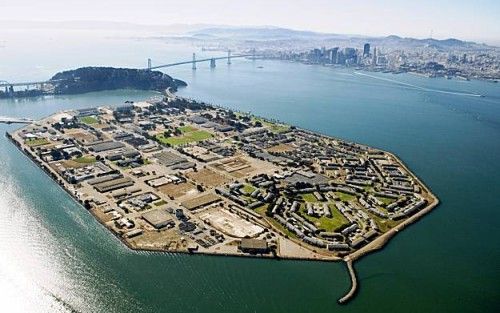
Field Trip: Treasure Island @ S.F

Monday, the 10th of June 2013, our architecture class went to this San Francisco trip. Our first stop from our trip was Treasure Island. Treasure Island is an island located in the San Francisco Bay, in by between San Francisco and Oakland. The Island was made in 1937 & 1938, named by Robert Louis Stevenson after publishing his book novel "Treasure Island". Fact, the writer actually lived in San Francisco during the years of 1879-1880. The island was eventually used for the U.S Navy but as years passed, the island was bought by the city of San Francisco. It is told that the island is going to be rebuilt by this project called "Treasure Island Development" by the years of 2012-2014. I think that this island was really dead, there was no people at all. It seem as if you were in a horror movie. I really like the idea of remodeling that island, they need it.
Treasure Island, San Francisco, California

Sunday, June 9, 2013

Haiku

Haiku ~

Gothic Architecture
had so many massive arches
that would reach up to god

-

Koby Chavez

Haiku

Haiku ~

Romanesque Arches
with A wonderful design
made by the Romans

-

Koby Chavez

Wednesday, June 5, 2013

Haiku

Haiku ~

It's amazing domes
and it's religious beauty
all mixed together 
-
Koby Chavez


Sunday, June 2, 2013

100 Ideas That Changed Architecture - Chapter 25: Symmetry

Object: Perfect balance

In this chapter, 25,  it talks about symmetry, as read in the title of the chapter. It talks about how symmetry is used and also the look of symmetry. As said in the book, the word symmetry actually comes from the greek word, "Symmetria". Symmetry is basically a reflexion of a figure, like a mirror. An example of symmetry is the Salk Institute Laboratories which is located in La Jolla, California.
7616571802_50738e404d_z.jpg
Salk Institute Laboratories.
 La Jolla, California.

Some of you may actually remember this institute, I know I do. We have seen this institute before, back in first semester of intersession. I believe we were watching a documentary about this institute. I really like this institute. The look of it seems creative. In conclusion, I think that symmetry is important in architecture because for architectures, symmetry is an easy way to flip one organization to another or in other words, to keep it balanced. My opinion of this chapter is that it was a very explained/detailed chapter, I think this chapter was very fascinating. After all, I think symmetry is important not only in architecture but in the real world also.

Book cover of "100 Ideas That Changed Architecture":

Thursday, May 30, 2013

Haiku

Haiku ~

Mesoamerican
a place of beauty and culture
and with great ancient stones
-
Koby Chavez
 

Wednesday, May 22, 2013

Haiku

Mesopotamia

Mesopotamia & architecture is amazing.
It had beautiful temples and archs
that represented great power
to the people.
-
Koby Chavez

ancient_ziggurat_at_ali_air_base_iraq_2005.jpg

100 Ideas That Changed Architecture- Chapter 4: Column and Beam

Object: Ancient elements of building structures

In this chapter, Column and beam, it talked about the story of the usage of columns and beams. Columns is basically, mostly, used to connect it with a building structure to hold it. Beams can be used in a structure to carry loads from the columns that is being used. In this chapter, it also talked about "Great Hypostyle Hall of Karnataka  was an example of the usage of columns. This had a total of 134 columns in 16 rows, and in the middle of the two rows, the columns were higher than the rest of the rows. In this book/chapter, it also talked about hot the Central to the Chinese system that influenced countries in the far east was dougong, which was a structural element of interlocking wooden brackets, it was mostly used in the 7th century BC & onward. It brought a peak in the "Hang and song periods", the brackets joined the columns to beams and used comprise of precisely cut elements that locked together without fixings or glue. They also had a degree of flexibility, they thought that this would help buildings from earthquakes into happening. after the song period, their ideas from their religious building became used as decorations, the idea of that usage then became to increased. In my opinion into this chapter is that I found it very confusing. Reason why is because there was words I did not understood, I had to google the words I didn't understood... But after all, this chapter was really interesting.

Book cover of "100 Ideas That Changed Architecture":

Friday, January 18, 2013

Stanford Field Trip: The Gates of Hell

The Gates of Hell is a monumental sculptural by Auguste Rodin, also known as Francois-Auguste-RenĂ© Rodin, a french sculptor. The sculptor is 6 metres big & 4 metres wide, it also contains 180 figures, all designed by Auguste Rodin. Auguste Rodin would work on this sculptor on and off over 37 years (stopped till his death, 17 November 1917). Rodin apparently, never finished his amazing art work...

Stanford Field Trip: The Memorial Church

The Stanford Memorial Church ("The University's architectural crown jewel") stands in the middle of the Stanford campus, California, United States. The church was built during the American Renaissance by Jane Stanford, co-founder of Stanford, as a memorial to her husband, Leland Stanford, founder of Stanford University. Designed by Charles Allerton Coolidge, a very successful architect. The Stanford family were a very religious family so they decided to let the church to be open to all. The church was 'completely' built in 1903.


In This Day, people use this church for services: Weddings, Baptisms, Memorial Services, & more.
File:Stanford Memorial Church Interior 2.jpg
Stanford Memorial Church (During Construction): https://www.youtube.com/watch?v=k70ypgqywJY

Thursday, January 17, 2013

Documentary: "The Stone Thermal Baths" Peter Zumthor

The Therme Vals is a hotel/spa located in Vals, Switzerland, designed by Peter Zumthor. To be honest, I thought that the hotel & spa was amazing because of many reasons. One of the reasons why I think the hotel is amazing, is because of it's roof. The designer of the hotel, Peter Zumthor, decided to put in grass on the roof instead of leaving it empty, which made the hotel look very "creative-looking". This is very cool because  idea of grass on a roof is something you don't usually see in a hotel, house, building, etc. I believe that Peter Zumthor wanted the hotel to be part of the environment (hills, grass), and for this reason he added grass on the roof so that it could fit in.
3D Model of The Therme Vals: http://www.youtube.com/watch?v=k_DqQpEUZoo